Showing posts with label Nurture with insiprational people. Show all posts

Saturday, August 2, 2014

The importance of being a role model outside work

 While we stress the importance of leaders being role models at work with their work ethic, integrity, and compassion, we hardly pay attention to their influence outside the workplace. Perhaps we should. Thanks to the media, the symbols of wealth are now universal: expensive cars, clothes, holidays in exotic locations, and palatial homes. The continuing popularity of the bizzare Housewives series indicates our almost morbid interest in the lifestyles of the rich and famous. Who can resist the guilty pleasure of skimming through the Daily Mail's side strip chronicling the decadent lifestyles of celebrities, often relayed by the celebrities themselves through Instagram?  Unfortunately, slowly but surely,  the relentless media focus on the opulent lifestyles of the rich has skewed our perception -as a society- about what is valuable in life, and what it means to be successful.

In his engaging book "Delivering Happiness", Tony Hsieh of Zappos, talks about walking away from a contract with Microsoft resulting in a loss of 16 million out of a total of 40 million, because passion was more important than money. We may scoff that 24 million is not small change, but even these little examples add up to shift societal perceptions about wealth and the wealthy. There is no doubt that Bill Gates and Warren Buffet have strengthened the giving muscle in many of their peers globally, including those who have signed up for the remarkable Giving Pledge ,where billionaires pledge to give away most of their wealth.  When rich CEOs talk about not wanting their kids to be trust fund kids, they send implicit signals to others about the priority of values like hard work in success. Arguably, the most credible voice against inequality, in the documentary "Inequality for all," was that of  Nick Hanauer, CEO of Pacific Feather Company - because here was a wealthy man speaking out against inequality.    


 India's visionary and multi- millionaire businessman, Narayan Murthy, is known for his simple lifestyle. When a journalist expressed surprise at  Murthy's modest lodgings, Murthy responded by stating his belief that the rich should have modest private spaces, but build luxurious public spaces. Murthy's Infosys offices are a class apart in the amenities they provide. In a developing and populous country like India, where public spaces are often sub-standard, Murthy's credo is  inspiring. Compare this to another leading industrialist, Mukesh Ambani, whose  house is the tallest,  and perhaps -ugliest- structure in Mumbai. Even Ratan Tata, one of India's most venerable leaders, couldn't help questioning the appropriateness of Ambani's 27 storied house - which stands out like a sore thumb amongst the sprawling slums of Mumbai.  

A recent article about the super -shy, super-rich of Germany, illustrates the influence that modesty from the rich can have on shaping societal perceptions, and trends towards the loftier values in life. While leaders are free to decide how to spend their hard earned wealth, they should be conscious of their influence - positive and  negative - on public perceptions about wealth and success.     


Infosys' Pune office

Murthy at lunch with wife Sudha


Friday, July 11, 2014

Rev John Flyn: The Australian outback's visionary

The Royal Flying Doctor's museum in Alice Springs
Even today the Australian outback is one of the remotest places in Australia. I did not see a single soul or sign of human activity during my day long journey by the Ghan train from Darwin; the capital of the Northern territory, to Alice Springs; the heart of the outback. It was just vast stretches of arid red land and desert vegetation - beautiful to the eye, but arduous for those living there.

An unexpectedly inspiring stop in the charming  town of Alice Springs is the Royal Flying Doctor Service of Australia museum. Its founder, Rev John Flyn, began his missionary work in the Australian inland after World War 1, and soon realized the extreme isolation of the people living there, especially in terms of medical care. Only two doctors served the whole of the northern territory (almost 1,5000,000 sq. km). Any serious illness meant death because of the lack of timely access to medical care. Flyn understood that communication and aviation were key in reducing the people's isolation, but both were in their infancy in the early 1900s.

Flyn first made his case by publishing an article written by a young medical student, Clifford Peel, who was killed in WW1. Peel argued that air transport, especially for ambulance work, was crucial for the outback. Peel's letter became the foundation for Flyn's relentless campaign for an aviation based medical emergency service for the area. Luck is opportunity meeting preparation, and Flyn had two fortuitous instances. The first was a generous fund provided by his long time supporter, H.V Mckay; the second was the support from Hudson Fysh, the founder of QANTAS. The first flying doctor flight finally became a reality in 1928.
Prototype of the interior of the Flying Doctor's plane
The final crucial link: communication, was provided by Alfred Traeger, with his pedal operated generator to power a radio receiver; the pedal ensured that the operators hands were free. People could now call in for emergencies. Later transistor radios allowed doctors to consult with their patients in remote areas. 

While the flying doctor service in itself was a monumental achievement, Flyn wanted to ensure that the medical care provided was of the highest quality. He enlisted the support of trained nurses, and Sister Lucy Garlick, came up with the innovative body chart where the different parts of the body are numbered, making it easy for the patient to convey their symptoms. A standardized medical chest with numbered medicines was also created for patients to begin treatment before the doctor arrived. The former prime minister of Australia, Robert Menzies, called the Royal Flying Doctor's service "the greatest single contribution to the effective settlement of the distant back country we have seen in out time."  

Today the accessibility of the outback to medical care is much improved, but the Flying Doctor services continues to play an important role in the area by providing regular clinics for the people of the outback, in addition to its emergency services. It has also expanded its activities beyond the outback with most of its revenues today coming from transferring patients between hospitals in cities. But the pioneering work of John Flyn continues to be inspirational. His vision, however improbable at that time, was clear, and born out of deep love for his people. This enabled him to persevere through the technological and financial challenges - it took more than ten years for his vision to be realized. Rev John Flyn's story set against the backdrop of the vast and isolated outback is a reminder of the power of ideas and determination.
  

Flyn commemorated in the Australian 20 dollar note. The body chart is also visible here.

Queen Elizabeth using the Flying Doctor's radio services to address people in remote areas during her 1963 visit

Monday, June 23, 2014

Taronga Zoo's nurturing leadership


I recently had the opportunity to hear the Sydney Taronga Zoo’s unassuming CEO, Cameron Kerr, speak at a banquet dinner organized at the Zoo. Mr. Kerr; an excellent speaker, held the audience spellbound as he told us about the various sustainability and community initiatives of the Zoo. What particularly stood out (and was deeply moving) is the unusual yet highly effective community outreach program of Taronga Zoo for Aboriginal children. The program called the Burbangana Program (take my hand and help me up, in the indigenous language Dharug) is aimed at disadvantaged Aboriginal children around the ages of 11-17, already in the official out of home care system in Australia. These children are considered highly disadvantaged because of their history of serious abuse and neglect, and many have disabilities which exclude them from a formal education system.

As part of the Burbangana program, these children don the official zoo uniform (the only outsiders given this privilege) and are paired with Aboriginal mentors to care for the animals in the zoo.  Mr. Kerr mentioned that slowly but surely the children overcome their fear and suspicion, and come to trust their mentors and others at the Zoo. For example, it was common for valuables like IPads, mobile phones etc to disappear when the children first come in, but they would start reappearing in a while. 

Who would ever think that a Zoo could engage in such a significant endeavor? Yet, what better way to raise the self-esteem and trust of these children than making them care for animals? At the beginning of the banquet animal handlers of the Zoo allowed us the opportunity to observe many animals at close range. None of these animals were of the typical cute and cuddly category – but included a lizard, python, turtle and a porcupine. Yet, the sight of these animals quietly sitting in the trusted hands of their handlers, allowing noisy strangers to touch and flash photograph them, brought out the deepest sense of love and concern for them. One could understand how therapeutic caring for animals would be for the Aboriginal children in the program. The Burbangana Program was one of the only seven winners of the Australian Crime and Violence Prevention Awards in 2011.

Another aspect that stood out was the disregard for the need to be politically correct. The program is clearly called “help me”.  Another similar program of the Zoo, Walanmarra, translates as “make me strong now”.  We are only too familiar with the meaningless jargon rampant in organizations –participative leadership, empowerment, calling customers clients, calling employees partners – veneers that crumble at the slightest touch. Taronga Zoo with its bold commitment to “help” is clearly guided by its values shorn of any adornment. It is this focus that makes its Burbangana program a trail blazer for innovative leadership.  

Thursday, June 12, 2014

Oprah on the importance of nurture


Oprah at the Stanford Business School
In a recent interview to the students of Stanford Business School, Oprah offered several insights closely aligned with the theme of this blog. With disarming candor she discussed topics ranging from her beginnings to the meaning of life. The central theme of her interview however is the importance of constantly pausing to listen to one's inner voice. The first step to anything is really about finding yourself ( there is no doing in the world without being). This is hard work, and must be lifelong process (pay attention to your life, I work on being awake).  

What stands out in the interview is her belief in the greater purpose of every human being. She for instance was born out a single causal sexual encounter between her parents, but knew that she would not be defined by that.

Always find the connection to your self and to that which is larger than yourself.
 
Your calling goes beyond your job, there is a definite role of destiny.

You can change the world only if you know yourself.


 While one must strive to find one's calling, it's not always easy. A good place to start is to know what you don't want to do. It was after a series of misfit odd jobs that she found her true calling as a talk show host. She clarified that within her role as a talk show host, her real purpose is to raise the level of people's consciousness.   

How does one know when they have found the right career for themselves?

When the personality comes to serve the energy of your soul, that is authentic empowerment.

When your personality is aligned with your purpose..and nobody can touch you. You wake up every day raring to go.

The highest truest expression of yourself  is what everyone is looking for.


She stresses on the importance of nurture - of taking care of yourself. She mentions that one of the questions she asks when hiring top executives is about their spiritual practice (non-religious), because she wants to know how they keep themselves centered amidst their busy lives. 

 It is important to lead a genuine inner life.

Fill yourself up first, only then can you offer. Be full of yourself. Honor yourself. and what which is greatere than youself. Only through that can you offer yourself, your full expression of yourself. Nurture yourself. Quieten your inner voice that you are not good enough. Your being here is such a miraculous thing, and your real job is to honor that. I am the lucky one who got to be here.

One important insight she offered for leaders is to pay attention to their followers needs.

Every person in the world shares one common desire - the need for validation. Did you hear me? Did you see me?

(She gained this insight because every guest in her show from a confident Bill Clinton to a murderer, always asks the same question at the end of the interview: "how did it go'?)

Yet another piece of advice is her take on mistakes and failures.

There are no mistakes. There is a supreme destiny. Your job is to listen to that, and be that. There are no wrong pathys. Failure is just one thing trying to lead you in that path. The losses are there to wake you up. You are not going to be defined by one mistake, one incident. Just ask what is the next right move


Listen to this engaging and insightful talk here.


 Picture credit

Wednesday, June 4, 2014

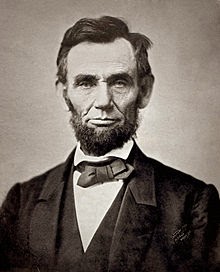
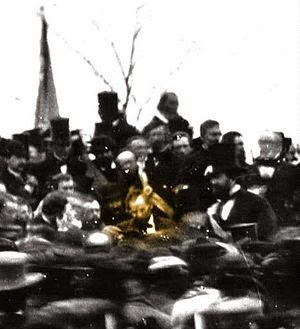
Lincoln's Gettysburg address: A lesson for dealing with detractors

Lincoln's Gettysburg address is now considered one of the greatest speeches in American history. Quotes from the speech are so widely used globally, that we forget their origin. For example, my sixth grade teacher in India used  Lincoln's closing statement of democracy being the government of the people, for the people and by the people to explain democracy to us. America is celebrating the 150th anniversary of the speech this year with much pomp and pride.

The two to three minute speech is today marveled for its simple eloquence, and for its ability to distill the essence of America's values in a few profound sentences. In fact Lincoln's speech was so unexpectedly short that many photographers missed capturing the historic occasion on their cameras. It is unlikely that the status of the Gettysburg address will even marginally diminish in future, since the power of its words is timeless. 


Examining the journey of the speech from when it was delivered on November 19, 1863 to its current undisputed status as one of best speeches in history illustrates the long journey to success of any endeavor. 

Lincoln was not the main speaker of the day, but followed the two hour long well-received address of the keynote speaker : politician and orator, Edward Evert. The reaction to Lincoln's address was far from overwhelmingly positive. The reactions of the press was predictably along political lines. The New York Times, the Providence Daily Journal and the Republic were very favorable to the speech. However, the criticism was particularly harsh from some others. For example, The Chicago Times wrote that

"The cheek of every American must tingle with shame as he reads the silly flat and dishwattery [sic] remarks of the man who has to be pointed out as the President of the United States. … Is Mr. Lincoln less refined than a savage? … It was a perversion of history so flagrant that the most extended charity cannot view it as otherwise than willful."

The Patriot dismissed it as some "silly remarks", and even the British paper the London Times minced no words in the following report.


The ceremony was rendered ludicrous by some of the sallies of that poor President Lincoln. Anything more dull and commonplace it would not be easy to produce." 
 

However the astute keynote speaker Evert realized the significance of Lincoln's speech, and in a tremendous display of courage wrote to Lincoln.
 
 I should be glad, if I could flatter myself that I came as near to the central idea of the occasion, in two hours, as you did in two minutes.”

Lincoln graciously replied that he was glad his speech was not a complete failure. Over the years the speech slowly but surely entered the realms of the American public, and acquired its current hallowed status. In fact the Patriot
retracted its 1863 editorial comments, by expressing its regret for the error. 

Aspiring and present leaders can draw inspiration from this remarkable journey of the Gettysburg
address. Success does not happen overnight, but has a rather tumultuous journey. Even the best work can risk being drowned by the voices of a few critics. But as Epictetus says there is no point worrying about things beyond our control. One can only do one's best and move on. We live in times of instant gratification and pressure for short term results. It's worth taking the time to pause and look at the origins of some of the great and enduring achievements in history. Finally, as Aristotle points out, our success (a good life) does not end when we die. Lincoln did not live to see the rise of his "little speech" to legendary status. But his legacy lives on, stronger than ever.      

Lincoln picture credit
Gettysburg address picture credit
 

Wednesday, May 28, 2014

The inspirational Maya Angelou

The legendary poet Maya Angelou has died at 86. The web is abuzz with stories about her incredibly rich life, and her remarkable journey from a traumatized mute child to a global icon. In addition to her exceptional books and poetry, Angelou was also known for her inspirational quotes.

In a recent HBR interview  Angelou discussed her views on leadership.

A leader sees greatness in other people . He nor she cannot be much of a leader if all she sees in herself.


One of her most famous quotes, which resonates the views of transformational leadership is

I've learned that people will forget what you said, people will forget what you did, but people will never forget how you made them feel.


Another quote echoing the importance of intrinsic motivation is

Pursue the things you love doing, and then do them so well that people can't take their eyes off you.        

         Finally, a quote on success, which reflects the views of this blog.


        Success is liking yourself, liking what you do, and liking how you do it.   


                                                   R.I.P Maya Angelou.

Picture credit
          Picture 2 credit