Showing posts with label Nature. Show all posts

Monday, September 29, 2014

The tale of two Presidents: whose leadership will endure?


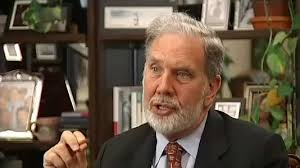
Leon Botstein, President of Bard College
The recent New Yorker piece about charismatic Bard College President Leon Botstein, asks whether Botstein, who transformed Bard College during his almost four decade long tenure as President, can insure that the institution outlasts him? It appears that Botstein - a genuine idealist who believes in the value of an affordable liberal arts education - has taken Bard College to where it is now primarily on the strength of his personal charisma. As the time for his retirement looms, the future of Bard College is uncertain because of its poor financial health. In the past most donors supported the College because of their personal affiliation with Botstein, rather than to the college.

Contrast Botstein to another charismatic president in the area, John Sexton at NYU. Sexton, with his strong Jesuit values, wants to create global citizens, and has over the last decade expanded NYU at a breathless pace not just in its neighboring NYC area, but also in Abu Dhabi and China. Except that he lost the confidence of his faculty in the process, and will step down in 2016 when his current contract expires. Sexton already has in place his post retirement plans - he will work for education for the needy. NYU has climbed up in rankings since he came in, has a solid reputation globally with its Abu Dhabi and China campus up and running. There seems to be no reason at this point to worry about its continuing rise in the rankings.


John Sexton, President of NYU
How will we judge these two men as leaders? In some ways comparing the two is akin to comparing apples and oranges - Bard has 2000 students, while NYU has over 50,00. Yet as individuals these men share remarkable similarities - both have strong values about the importance of  a liberal arts education, freedom of speech, are charismatic and larger than life, caring in their personal relationships (Sexton is a big hugger), great speakers almost in love with their own voices. Why has their appeal on their followers then been so different? Kouzes and Posner in their book on leadership rightly talk about credibility as the foundation of leadership. It appears that Sexton, was in part brought down by not walking the talk. Blinded by his desire to attract world class faculty to New York, murmurs are rampant about the outlandish pay and low interest loans to select faculty, while tuitions have skyrocketed resulting in an alarming rate of student drop outs. NYU faculty also accuse Sexton of non- transparency, and for establishing campuses in countries with dictatorial regimes- Sexton argues that he is respecting local traditions.While Sexton claims to not have any possessions other than his pension, the New Yorker article featuring Sexton, notes his perks, including a first among equal status with Emirates Airlines.

Another important difference between the two lies in their ability to make their followers buy into their vision, by letting them observe the fruits of their labor. Despite the grumblings of Bard college faculty about the abrasive style of Botstein, they see the difference they are making. One glowing example is the Bard Prison Initiative (BPI) which runs "college in prisons" programs in nine states, and offers the same course content to prisoners as the regular students receive, and has an admirable ratio of graduation to enrollment. The guiding philosophy for this initiative is that critical readers learn to be better self critics, which in turn reduces recidivism. NYU faculty on the other hand do not see the immediate purpose of their seemingly meaningless expansion except in rising student tuitions and drop out rates. 

This is a story of two leaders whose legacies are in question for different reasons - Botstein's because of the uncertain future of the organization he leaves behind, Sexton's because of his personal leadership style. Aristotle rightly points out that we cannot judge a man's life until they are dead, or in some cases even after they are dead. Thus it is too early to pass judgment on Bonstein or Sexton. But Bonstein seems more likely to prevail because his personal values have not yet come under the scanner. Sexton seems to have lost his credibility along the way, and the NYU faculty will try everything in their control to erase his legacy when he is gone, and perhaps even undo his vision. Sexton, like may other charismatic leaders seems to have overlooked his most important constituency - his faculty. Perhaps he will learn from this experience and redeem himself in his future projects. Watch this space for updates.      

Saturday, September 13, 2014

Are introspective leaders narcissistic?

David Brooks' recent op-ed in the New York Times, asking whether introspection is just narcissism in sheep's clothing, unsurprisingly drew some harsh criticism - including some personal jabs. Although it's easy to poke holes in Brooks' arguments, it is important to poke these holes.

Brooks suggests that the dangers of self-examination are rumination and over-simplifying. Rumination is a solitary process which can lead to the ruminator spiraling into greater depression, or unnecessary self aggrandizement- depending upon their initial state of mind. Over- simplifying is similar to rationalization, and used to justify -to ourselves-, our obviously poor choices. Brooks offers some examples from research in psychology to illustrate how one can move away from a self-immersive form of reflection to a more detached, critical form -which is likely to result in a more accurate and therefore healthy self-perspective. Finally, Brooks suggests quite ambiguously that rather than focusing on our strengths and weaknesses, we must gain perspective by focusing on a broader empathetic view of the world.       

First, it is important to not go overboard in criticizing Brooks- it's after all just an op-ed and not a research paper. Plus, what better way to strengthen our convictions than to counter the arguments against them?  The first flaw in Brooks' reasoning is that self reflection through self-immersion and from afar are mutually exclusive. Instead they are two sides of a coin. Even research in organizational behavior recognizes the importance of 360 degree feedback (or evaluations from multiple sources) for a more accurate final picture. Another major concept in organizational behavior - emotional intelligence- is a combination of self-awareness and "other" awareness, with empathy being an important component of other awareness.

The gaping hole in Brooks' op-ed is right in the title. Narcissism is actually the absence of introspection, and refers to self- absorption with a blinding desire to be admired. Self-introspection on the other hand is a concerted effort to understand oneself, and to better fit in with society. For example, self-reflection and self regulation in emotional intelligence refer to an attempt to understand one's emotions to better manage them in the larger social context, like not losing one's temper. How is that narcissism?

The fundamental problem in the op-ed is the compartmentalization of the various forms of self-reflection. For example, understanding one's strengths and weaknesses is crucial in pursuing the right career; a decision which has a significant effect on our well-being. Surely Brooks'  good understanding of his strengths as a writer landed him his prestigious Times job. The problem lies when self-reflection and self-acceptance do not go together. I overheard a conversation between two perfectly fine looking women vehemently agreeing with each other that they hated what they saw in the gym mirror. Introspection should come from a deep desire to know and accept, and not be confused with mere self-evaluation.

So, are introspective leaders narcissistic? No, narcissistic leaders are not introspective!

Sunday, August 17, 2014

The thirst for values based leadership

A recent survey by the Pew Research Center indicates that military service continues to be the most desirable trait in a Presidential candidate.  Interestingly, atheism was a deal breaker with 53% of the respondents saying they were less likely to vote for an atheist - the highest in the less likely category.  Another notable difference from earlier years was that respondents who viewed a candidate's  prior experience in Washington DC as a negative, outnumbered those who considered it as desirable. Prior experience continued to be important, but in a gubernatorial capacity.

Although America vehemently holds its state and religion separate, and in general has  an anti-war sentiment, why might religion and military service consistently figure at the top of desirable qualities of leaders? Demographic facts aside, it is undoubtedly the moral values that religion represents, and the belief that a religious candidate will adhere to them. Military credentials also represent a candidate's  experience in adhering to a strong moral code.

In their best selling leadership book - Leadership Challenge- , authors Kouzes and Posner discuss the results of their survey of over 70,000 people over the globe (latest data in 2007), to identify the most important characteristics of a leader as: honesty, forward looking, inspiring and competent. They point out that credibility is the foundation of good leadership, and the most important behavior of a credible person is that "they do what they say they will do".  The Pew survey results suggest that the partisan behavior in Washington at the cost of public interest, has eroded the faith of the public in their elected representatives. The gubernatorial posts are seen as more independent, less likely to be influenced by vested interests of others.

How can a leader ensure that they always do what they say? To paraphrase Kouzes and Posner, this begins with the leader having a clear set of values, and then consistently living these values. This is the- behavioral way- of demonstrating honesty and trustworthiness - the cornerstones of leadership. The Pew center results don't just indicate the importance of values based leadership, they show that the public yearns for credible leaders. Religion and the military are valued - at least by the American public- because they  provide the structure and motivation for leading a values based life.        


Thankfully, despite the upheavals in Wall Street, 33% of the Pew study respondents favorably view a business executive as a presidential candidate, while 13% view them as negative, and 53% say it didn't matter. Business leaders must take this opportunity to rebuild their credibility by practicing values based leadership.

Monday, August 11, 2014

Fixed vs. growth mindset: Examining Roger Federer

Roger Federer lost to Tsonga in yesterday's Roger's tennis cup final. As always, his critics have been quick to write him off, yet again. Why not quit while at the top, and leave in the blaze of glory? Why put yourself and your fans through those humiliating moments, when your strokes are a shadow of your hey days, and when younger and gutsier players beat you regularly?  But then, that's not how Federer thinks about tennis.

Carol Dweck in her book "Mindset", talks about the difference between the fixed mindset and the growth mindset, and the importance of the latter for sustained success. Those with a fixed mindset consider ability as static, and judge themselves and others by "results" or peak performance. Therefore, they avoid challenges which may tarnish their impeccable performance record, get defensive when faced with obstacles, don't believe that effort can enhance their already considerable talents, cannot handle negative feedback and feel threatened by the success of others.

Those with a growth mindset on the other hand, believe that ability can be developed, constantly embrace challenges, persist in the face of setbacks, see effort as a condition to mastery, learn from criticism and from the success of others, and thus reach ever-higher levels of achievement (Mindset, by Carol Dweck, page 245).  Dweck makes an important and interesting distinction between leaders with a fixed mindset and a growth mindset. The fixed mindset leaders may be high individual performers and stars, but do not prepare their firms to survive in their absence. Here is where the mighty Iacocca fails; Chrysler didn't survive after his departure, while it can be argued that Apple continues to buzz away, albeit in a lower key, even after Steve Jobs' passing.   

Back to Roger Federer. It is evident that he does not have to prove anything to anyone but himself. Why does he continue with his grueling tour and training schedule despite his ever growing family? What motivates him despite not winning a major since 2012? His  love for the game has to be the top reason, but how does he cope with not winning titles, and near misses, after his undisputed reign at the top for many years?

Federer definitely is a supreme example of a growth mindset. He is no fool to continue playing while his skills are waning across the board. As the grand old man of tennis at thirty three - an age when improving one's game seems improbable,- Federer's serve has actually improved and is the strength of his game today. He continues to train with his long term  physio-whiz, Paganini, who is angered at the talk of people wanting Federer to quit, because he knows Federer is still capable of a shot at the big titles. One mustn't forget that he is still the number three in the world.  Admittedly, even the unflappable Federer has gone through some -coming to terms- moments of being defensive, or even worse -crying- when he loses. But thankfully the growth mindset has truly established its presence now. No doubt winning titles is his ultimate goal, but not the only goal.

Using Dweck's criteria of a true growth minded leader, will Federer leave tennis a better place than it was since his arrival? The answer is a resounding YES. His seventeen grand slam titles don't seem so out of reach now for Nadal, or even Djokovic. But Federer, as even his rivals admit, has raised tennis to new heights, not just with his sublime talent, but with his global appeal, approachability and above all his growth mindset work ethic: an inspiration to all aspiring players. As his coach the great Stefan Edberg remarks "If Roger is in the game, it is great for tennis".

Another great man with an insatiable growth mindset -Tiger Woods- is now lying low, undoubtedly  working hard on recouping his physical and mental prowess. His detractors too have already written him off as incapable of winning another major, but sooner than later Tiger is bound to prove his critics wrong. 

The growth mind set is after all about running the marathon rather than the sprint.  


Friday, June 6, 2014

Short term or long term? The duality challenge for leaders

In the "Handbook of Leadership Theory and Practice (2010)", Nohria and Khurana rightly point out that leadership is primarily about dealing with different forms of dualities. For example, leaders must ensure that their organizations are perform well financially without compromising on ethical standards. Leaders are usually distinctive individuals, but they must also play a social role. In today's globalized world, leaders must have universal appeal, but they must also be sensitive to local differences. Leaders must make autonomous decisions but yet adhere to certain expectations of society. Finally, a leader must focus on developing their competencies without losing sight of their true selves.


I argue that in addition to these dualities, leaders have to constantly address the long term vs. short term orientation of their organizations and themselves. Although history is ample proof that success does not happen overnight, and we acknowledge the 10,000 hour practice rule to achieve perfection; we are quick to dismiss people when the going gets tough. The world's blue eyed boy, Mark Zuckerberg who achieved rock star status when Facebook went public, was within a year urging his shareholders to be patient in judging Facebook's less than stellar performance in the first year. He reminded them of  how Facebook's took over nine years to achieve its current status. Louis C.K now considered  the comedian of comedians,  in his typical self-deprecatory yet profound style, suggests that his few years at the top now, is backed up by his struggle for 43 years. The now bestselling car in India, the Tata Indica, was initially dubbed "Ratan's folly" after Tata CEO, who is now one of India's most admired leaders. Even the legendary Steve Jobs was fired from Apple before he made his triumphant return.

How can leaders deal with this duality?  Research indicates that convincing others to have a long term perspective is likely to be a losing battle. As human beings we are wired to value short term benefits over the long term even in matters directly affecting us. Wouldn't we be able to resist the second piece of chocolate cake otherwise?  This short term focus only intensifies as we move to more distant aspects like stock market performance and  profits. A leader therefore has to look within to strike this balance. As my boss pointed out "Life maybe unfair in the short run, but is fair in the long run".

This is why values based leadership is so important today. In the famous Merck case, CEO Vagellas gave away the river blindness drug Mectazan  for free despite Merck's huge investments in developing it. Vagellas says that the decision although extremely risky, was not difficult because he focused on Merck's values of "saving human lives" rather than the short term adverse implications on the company's profits. A leader with strong values concentrates on upholding them, rather than on long term or short term results. Doing this requires courage and the deepest level of conviction in oneself. Although it's too early to judge Mark Zuckerberg, it appears that all the software development in Facebook is geared around people building relationships, which is why protecting anonymity is not the first criterion in their product development. We may disagree, but having such a focal point makes decision making easy.


To restate Nohria and Khurana's last duality that leaders must come to terms with - the duality of acquiring competencies versus staying true to oneself-, the solution is to acquire those competencies that can help you stay true to yourself. These competencies are internal values rather than skills. Back to quoting Louis CK, whose current hit show Louie, was preceded by Lucky Louie which lasted only one season. Louis CK feels that compromising on his artistic freedom may have given the show a second season.

But I did what I wanted to, creatively. I’m so glad I did it that way. And now I’m further emboldened with this job.


Picture credit

Saturday, May 31, 2014

Transformational leadership: Part 2

In addition to the full model of leadership discussed in the previous blog, two other influential views of transformational leadership are worth discussing.

Bennis and Nanus (1985)

According to this approach, becoming a transformational leader begins with a deep understanding and acceptance of one's strengths and weaknesses. Transformational leaders then focus on their strengths in positive ways, which fueled by their inherent sense of self-worth, inspires confidence in their followers. Transformational leaders also have a clear vision for their organization, believe in participatory decision making, and focus on social change in their organizations (are "social architects").  By ensuring that their actions and behaviors are always consistent with their vision, they foster a sense  of trust in their organizations. There is a strong moral thread that runs through a transformational leadership style, because it originates from the deeply held values of the leader. Transformational leaders are continually learning, and encourage their followers to develop this passion for personal growth.

Kouzes and Posner (2012)
 

In their best selling book "The Leadership Challenge" (which celebrated its 25th anniversary in 2012), Kouzes and Posner create a model of leadership based on their extensive interviews with over a 1000 middle and senior level managers. Transformational leaders practice the following five principles

  1. Leading by example (modeling the way)
  2. Inspire a shared vision which is vivid and serves as a guide for action to the followers
  3.  Challenge the process (not being complacent, constantly learning)
  4. Enable others to act ( believe in teams, collaboration and delegation)
  5. Encourage the heart ( believe in relationships and positive reaffirmation of followers)
Based on these five practices they also identify certain commitments that leaders must make. These include clarifying values, fostering collaboration, taking risks etc.

The most important quality that followers look for in their leaders is "credibility" which in turn comprises of honesty, being forward looking, competence and the ability to inspire. The appeal of this approach, which perhaps explains the enduring success of their book is that leadership is considered to be a practice, rather than a personality trait.

Kouzes and Posner discuss their book here.  


References

Bennis, W.G., & Nanus, B. (1985). Leaders: The strategies for taking charge. New York: Harper & Row

Kouzes, J.M., & Posner, B.Z. (2012). The Leadership challenge (5th edition). San Franciso: Jossey-Bass

Northouse. P.G. (2013). Leadership (sixth edition). Thousand Oaks, California: Sage Publications Inc.       

Picture credit (Kouzes and Posner) 
Bennis and Nanus book

Sunday, May 25, 2014

What is leadership? The evolution of leadership*

Examining how leadership has evolved over time will reveal that leadership is indeed a product of its times. The active study of leadership began in the early 1900s, and the important theories that have guided our understanding of leadership are listed below*.

1900s to 1940s (and a resurgence from 1980s to present): The trait approaches ( initially called the Great man theories). This approach to studying leadership tried to identify certain common inherent characteristics (traits) shared by great leaders of that time, in order to understand what makes some people leaders. An analysis of the major findings of research of over a century indicates that there is some general consensus about the important desirable traits in leaders. These are intelligence, self-confidence, determination, integrity and sociability (Northhouse, 2013).

It is easy to understand the appeal of trait theories because of their simplicity. However, the trait theories assume that leaders are born than made, which makes them irrelevant in developing leaders. Interestingly there has been a resurgence in the study of the traits approach, with studies focusing on the personality of leaders using the Big Five model (Goldberg, 1990). It appears that the personality of extraversion was most strongly associated with leadership, followed by conscientiousness, openness, and emotional stability.  There is also a  rising interest in the study of emotional intelligence as an important attribute of leaders. Since it is believed that emotional intelligence can be developed through reflection and practice, the leaders are "born" drawback of trait theories has diminished with these new areas of study of human traits.


1930s to 1960s (behavioral theories): The study of leader behaviors (how they behave and act)  was the next significant area of research. Some important behavioral studies are the Ohio State University and the University of Michigan studies in the 1950s and 1960s. These studies essentially found that leaders could be differentiated into task oriented versus people oriented. However, it was Blake and Mouton's 1964 study which discussed the implications of these differences in leader behaviors in an organizational setting. For example, according to Blake and Mouton, the team oriented style (also called the 9.9 style), which is considered to be most effective, is the result of leadership which is high in both task and people orientation. While these studies made significant inroads in understanding the behavioral aspect of leadership, they were still considered narrow in scope in explaining the complexities of leadership.

1960s to 2000: Situational or contingency theories: Contingency theories believe that instead of exhibiting a consistent leadership style, effective leaders should behave according to the situation. One important theory using this approach is Hershey and Blanchard's situational approach. They suggest that an effective leader uses different styles depending on "employee readiness". For example, a rookie and a veteran need different leadership styles. Another interesting theory is Fiedler's contingency theory which suggests that the effectiveness of a task oriented leader and relationship oriented leader depends on the type of situations they manage. Task oriented leaders are most effective when things are going extremely well, or when there is chaos. Relationship oriented leaders are effective when things are going moderately well. Fiedler's theory is a tad controversial because he suggests that the leadership style of a person is fixed.

1990s to present : Relational approach. One prominent theory using this approach is the leader member exchange theory (LMX) which suggests that leaders with high quality and stronger relationships are more effective. The LMX theory makes a significant departure from other theories by examining one to one relationships between the leader and the follower.

1980s to present: Transformational leadership. This approach considers leaders as those who inspire a shared vision for their organizations and bring about positive transformations. Charismatic leadership is closely related to transformational leadership, but recognizes the fact that charisma while potent could also be used for negative ends (Hitler being the most common example).

2000 to present: New emerging approaches. We are living in exciting times for leadership. The context for leadership continues to change at a rapid pace due to globalization, the rise of women in the workplace and the advent of technology. The sub-prime mortgage crisis and the wide wave of destruction it left behind in the entire world, has brought the need for ethical leadership to the forefront. Authentic Leadership is one theory generating a lot of interest due to its focus on values and moral compass of leaders. Servant leadership stresses that leaders must view themselves as servants of their followers, and strive to empower them. Spiritual leadership with its focus on meaning is another contemporary theory of leadership which is gaining ground.

This blog's focus is on the transformational and the new emerging approaches because these theories have universal appeal, and are relevant to our times. For example, a leader in any culture must have a vision, and possess the ability to influence others to share their vision. Ethical leaders are desired by all cultures, and will be particularly effective in these times where trust will have to be established first and quickly. A leader's reputation is certain to precede them today. The focus on serving employees rather than controlling them also has universal appeal.  Finally, spiritual leadership's emphasis on meaning also strikes a chord universally as people try to make sense of their place in their increasingly complex environments.

Goldberg, L.R. (1990). An alternative "description of personality": The big-five factor structure. Journal of Personality and Social Psychology, 59, 1216-1229.

Hershey, P., & Blanchard, K. H. (1969). Life-cycle theory of leadership. Training and development journal, 23:26-34.

Northhouse, P.G (2013). Leadership. Sixth edition. California: Sage Publications Ltd.
* Northouse, P.G. (2015). Adapted from Introduction to Leadership (Concepts and Practice). California: Sage Publications Ltd.

Picture credit

Saturday, May 24, 2014

Leadership versus Management


                              The difference between management and leadership

Leadership has been discussed from time immemorial. For example, the Indian epic Mahabharata - essentially the story of good versus bad leadership from the vantage point of kings- can be traced way back to the 8th century BC. The term management however, was used after the industrialization of society in the early 1900s. The seminal work of Frenchman Henri Fayol; “General and Industrial Management” first published in 1916, continues to be the cornerstone of Management 101. Fayol was primarily interested in improving the efficiency of organizations, and formulated certain concepts which managers could follow to manage their organizations effectively. According to Fayol the five essential functions of management are planning, organizing, command, coordination and control. He also discussed fourteen principles of management, including the chain of command (who reports to whom), centralization (where are decisions made), division of work etc. It is evident that the priority was on efficiency although to his credit, Fayol recognizes the importance of a congenial workplace, and group spirit (spirit de corps).  

One of the earlier influential articles discussing the difference between leadership and management is Zaleznik’s 1977 HBR article “Managers and Leaders: Are they different?” Here Zaleznik compares leaders to artists; they are creative, not tied to their organizations, and are forward looking. Managers on the other hand are more analytical and focused on survival or status quo, rather than on change and risk. Kotter (1990) developed this idea further and stated that leaders manage change while managers manage complexity. Leadership therefore involves having a vision, and the ability to influence others to share and achieve that vision, while management involves the use of the management functions (similar to Fayol’s) to ensure that the organization stays afloat amidst the surrounding chaos. Therefore, managers plan and budget by setting timetables, and allocating resources, while leaders create a vision and clarify the big picture and identify strategies to pursue the vision. Managers organize and staff the organization by setting rules and providing structure, while leaders focus on aligning people to their vision by building committed teams. Managers focus on controlling and problem solving, while leaders focus on motivating and inspiring (Northouse, 2013). In a recent HBR blog Kotter continues to make a case for the distinction between management and leadership. Perhaps, the most important point Kotter makes is that leadership is not about possessing certain traits like charisma as is widely thought, but about exhibiting certain important behaviors like implementing a vision, which in turn can be learnt.


The key differentiator between leadership and management therefore appears to be the focus on the “future” without losing sight of the present. There is no doubt that management and leadership are complementary and successful organizations need both. Even the supreme visionary of our times, Steve Jobs had dedicated managers (including current CEO Tim Cook as his logistics chief) to implement his vision. Perhaps the most famous quote on the management-leadership distinction is Bennis and Nanus’s (1985:221) view that “managers do things right, while leaders do the right things”. Bennis (1989) argues that in the 21st century we need more leaders than managers, because leaders master change, while managers surrender to it (paraphrased). This might be a harsh judgment on managers, and the empirical evidence on this leadership-management distinction is limited. However, it appears that leaders rather than managers are the ones who rise to the top as the world churns. We already see smart organizations (leaders) having the foresight to focus on what they do best, and outsourcing their functions like HR to professional organizations that specialize in them. That is managing change.

On a personal level, being a leader rather than a manager involves constantly challenging oneself to improve, even when the going is good. Dr. Atul Gawande, a high performing surgeon talks about hiring another retired surgeon as a coach to help him improve his surgical skills even further. As a caveat; not everyone can be a leader, nor can everyone be a manager. Recognizing this distinction, and choosing the role which suits one best is personal leadership.   

References

Fayol, H. (1916). General and Industrial management. London: Pitman

Kotter, J.P (1990). A force for change: How leadership differs from management. New York: Free Press.

Northouse, P.G. (2013). Leadership (Theory and Practice). Sixth Edition. California: Sage Publications

Zaleznik, A. (1977). Managers and Leaders. Are they different? HBR

Gawande. A. (2011) Top athletes and singers have coaches. Should you? (October 3, New Yorker)