Sunday, June 15, 2014

The dangerous allure of confidence: The spectacular downfall of Eike Batista (and his believers)


Eike Batista
Eike Batista, flamboyant Brazilian entrepreneur and Chairman of the conglomerate EBX group went from being the 8th richest man in the world (worth $30 billion) in 2012, to 200 million (or even a negative net worth according to Bloomberg) in 2014. He has now topped the charts of a few worst CEOs of 2013 lists. The "hindsight" critics have been quick to jump into the fray, pointing out some unmistakable signs that were missed. Batista was unabashedly ostentatious - he parked his luxury car in his living room, proclaimed he would be the richest man in the world by 2015, didn't really have the managerial expertise to run his business empire, and always made his huge announcements about new oil finds conveniently before trying to raise funds. 

Batista was the poster boy of the surging  Brazilian economy; admired as a role model by his country men (his twitter account had over a million followers), and backed by global investors. His 2011 book (in Portugese) titled  Batista's X-factor - all his companies have X in their names indicating the multiplication of wealth- lists some simple rules to become a billionaire. These include -  believe in your intuition, aim for success rather than perfection, build businesses with maximum accuracy and minimum risk, a good seller must also be a good listener and the importance of being a maker rather than just a dreamer. Clearly, at least at this point, it appears that none of these rules applied to him. Batista has now withdrawn from the public eye and is licking his wounds, although he vows to make a comeback. He has promised to repay all his creditors, but recent filings with the courts indicate that the time frame could be over twenty years - if at all.

Batista kept his Mercedes -Benz SLR in his living room.
Batista's personal failings as a leader are clear, but he couldn't have amassed his 30 billion alone. People believed in him, and believed big. He consistently bagged some of most prestigious contracts from the Brazilian government, and was favored by big investors globally. One single factor  attributed to his ability to influence others over the years is his extreme confidence. He was after all primarily a -salesman - since he started his career as an insurance salesman.

 The Batista case illustrates the dangerous allure of confidence on others, and more importantly how susceptible we are to certain outward manifestations of confidence. The old adage of judging a book by its cover unfortunately holds true. We expect leaders to be impeccably dressed, exude supreme confidence in their strut and manner of speaking - the bolder and louder the better. Business schools focus on style than content -  on perfectly formatted documents, stylish presentations, and superb delivery. In fact, Batista's detractors comment that he is the only one besides Bill Gates to make billions through PowerPoint. This stereotypical image of a successful leader gets propagated with the increasing outreach of the media.  

It's time to look beyond the external manifestation of confidence, and focus on improving the self-efficacy of leaders. One of the influential researchers on self-efficacy, Albert Bandura ,defines self-efficacy as a person's belief about their capabilities to perform certain tasks and  their ability to influence the events in their life. In other words, self-efficacy is the result of a realistic analysis of one's capabilities. Those with high self-efficacy are therefore intrinsically motivated - Batista on the other hand seemed to be motivated by the thrill of becoming the richest man in the world. Those with a high level of self-efficacy are not discouraged by failures and persevere. They attribute failure to deficiencies which can be learnt, rather than as a personal failure.

In Bandura's own words, self -efficacy differs from confidence as follows.

"It should be noted that the construct of self-efficacy differs from the colloquial term "confidence." Confidence is a nondescript term that refers to strength of belief but does not necessarily specify what the certainty is about. I can be supremely confident that I will fail at an endeavor. Perceived self-efficacy refers to belief in one's agentive capabilities, that one can produce given levels of attainment. A self -efficacy assessment, therefore, includes both an affirmation of a capability level and the strength of that belief. Confidence is a catchword rather than a construct embedded in a theoretical system. Advances in a field are best achieved by constructs that fully reflect the phenomena of interest and are rooted in a theory that specifies their determinants, mediating processes, and multiple effects. Theory-based constructs pay dividends in understanding and operational guidance. The terms used to characterize personal agency, therefore, represent more than merely lexical preferences." (Self-efficacy: The exercise of control, 1997, page 382).

A strong sense of self-efficacy leads to confidence, but not necessarily only in a physical sense as we have become accustomed to. Confidence should be reflected in actions than in mere words. Batista,  salesman that he was - sold dreams than reality. And his investors bought it because they mistook the external signs of confidence for self-efficacy. As we become globalized it would be helpful to look closely at the values like humility held dear by other successful cultures to break out of our stereotypes. For example a common proverb in the Chinese culture is that " a full pot never splashes".   

It's too early to write Batista off, but hopefully his story will reinforce the need to break away from the cookie- cutter approach to training and evaluating leaders.  

Picture 1 credit
Picture 2 credit
 

Thursday, June 12, 2014

Oprah on the importance of nurture


Oprah at the Stanford Business School
In a recent interview to the students of Stanford Business School, Oprah offered several insights closely aligned with the theme of this blog. With disarming candor she discussed topics ranging from her beginnings to the meaning of life. The central theme of her interview however is the importance of constantly pausing to listen to one's inner voice. The first step to anything is really about finding yourself ( there is no doing in the world without being). This is hard work, and must be lifelong process (pay attention to your life, I work on being awake).  

What stands out in the interview is her belief in the greater purpose of every human being. She for instance was born out a single causal sexual encounter between her parents, but knew that she would not be defined by that.

Always find the connection to your self and to that which is larger than yourself.
 
Your calling goes beyond your job, there is a definite role of destiny.

You can change the world only if you know yourself.


 While one must strive to find one's calling, it's not always easy. A good place to start is to know what you don't want to do. It was after a series of misfit odd jobs that she found her true calling as a talk show host. She clarified that within her role as a talk show host, her real purpose is to raise the level of people's consciousness.   

How does one know when they have found the right career for themselves?

When the personality comes to serve the energy of your soul, that is authentic empowerment.

When your personality is aligned with your purpose..and nobody can touch you. You wake up every day raring to go.

The highest truest expression of yourself  is what everyone is looking for.


She stresses on the importance of nurture - of taking care of yourself. She mentions that one of the questions she asks when hiring top executives is about their spiritual practice (non-religious), because she wants to know how they keep themselves centered amidst their busy lives. 

 It is important to lead a genuine inner life.

Fill yourself up first, only then can you offer. Be full of yourself. Honor yourself. and what which is greatere than youself. Only through that can you offer yourself, your full expression of yourself. Nurture yourself. Quieten your inner voice that you are not good enough. Your being here is such a miraculous thing, and your real job is to honor that. I am the lucky one who got to be here.

One important insight she offered for leaders is to pay attention to their followers needs.

Every person in the world shares one common desire - the need for validation. Did you hear me? Did you see me?

(She gained this insight because every guest in her show from a confident Bill Clinton to a murderer, always asks the same question at the end of the interview: "how did it go'?)

Yet another piece of advice is her take on mistakes and failures.

There are no mistakes. There is a supreme destiny. Your job is to listen to that, and be that. There are no wrong pathys. Failure is just one thing trying to lead you in that path. The losses are there to wake you up. You are not going to be defined by one mistake, one incident. Just ask what is the next right move


Listen to this engaging and insightful talk here.


 Picture credit

Wednesday, June 11, 2014

The importance of credibility and its fickleness


Bowe Bergdhal
Two important stories captured the headlines last week. Army sergeant Bowe Berdaghl, the only known American prisoner of war, was released by the Taliban after five years in captivity. So traumatic was his captivity that  he is even unable to speak  English. Berdaghl is currently recovering in an American hospital in Germany. The other story was about teaching assistant Jon Meis subduing a gunman with pepper spray in Seattle Pacific University, preventing many deaths. The gunman was reloading his gun after shooting dead one student and injuring several others, when Meis intervened.


While both these young men endured in the face of adversity, the reaction of the American public to their stories couldn't have been more different. Meis, was labeled a hero; strangers tracked down his wedding registry and the gifts began pouring in.  An online campaign launched by another stranger to fund his honeymoon far exceeded the target.

Berdaghl, a war hero,  on the other hand was the target of the public's ire. There were serious political repercussions to his release - five militants were released in exchange without the knowledge of the Congress. But politics aside, much of the anger was directed against Berdaghl himself. This started when a former sergeant of  Bergdahl's platoon labeled him a deserter responsible for the loss of lives of several colleagues  who searched for him. The social media was soon abuzz with calls to label him a traitor, and so strong was the anti- Bergdahl sentiment that his homecoming ceremony in his hometown Hailey, Idaho, was canceled due to security concerns (including death threats).  Interestingly, none of the news against Bergdahl has been confirmed yet. The Army, despite his disappeance had not classified him a deserter. Defense secretary Hagel, and several others have repeatedly urged the public to not demonize a soldier without evidence.

The marked difference in the public response to these two typically heroic deeds emphasizes the importance of credibility in leadership. It also illustrates why perceptions matter more than reality. Integrity lies at the core of credibility. Studies have shown that Americans tend to consider their military leaders most trustworthy because we can count on them to place their lives on the line to secure ours. This is what Jon Meir did, and it immediately struck a chord. It appears that Berdaghl despite his military credentials as the only prisoner of war, took a big blow to his credibility when the deserter tag, even if unsubstantiated, was attached to him.

These stories can also be used to examine French and Raven's (1959) bases of power in leadership. Leaders usually wield five types of power: legitimate (due to their position), reward (ability to reward followers), coercive (ability to punish),  expert (due to their expertise), referent (due to their personal characteristics). Here, Berdaghl despite his legitimate power due to his military credentials was unable to influence the American public that he was a hero, because his referent power (his integrity) was in doubt. On the other hand, Meir despite no legitimate power ( he was not a guard), influenced the American public due to his referent power (his courage and integrity).

Leaders must therefore not take it for granted that they can influence their followers because of their title as a manager or CEO. In the long run it is the personal characteristics of the leader that matter. Individuals without any legitimate title can wield influence in their organizations by acquiring credibility through their personal characteristics of integrity and honesty. For example, Gandhi never held an official position in the Indian National Congress, but was the first person people turned to for guidance - so strong was his personal power.

Personal power however takes years to build, and can be lost in an instant. And perceptions matter than reality. Which is why a leader with strong values is able to build a strong base of personal power, and is also able to withstand the occasional inevitable fall from grace.  In "If" Rudyard Kipling discusses the qualities of the ideal man as 
    If you can meet with Triumph and Disaster
    And treat those two impostors just the same
 
A leader guided by his inner compass is the man Kipling is talking about....  

Sunday, June 8, 2014

Alfred Hitchcock's non-film obession

In 2012, Alfred Hitchcock's (1899-1980) Vertigo finally dislodged Citizen Kane as the best film ever made. Hitchcock's obsession with detail in his filmmaking is legendary. This ranged from his attention to the minutest details in his script, the costumes of his leading ladies (usually blondes), the visuals (he visualized his script to the last detail before shooting), the music (only Bernard Hermann could create that unmistakable sound of dread). It can be argued that it was Hitchcock who brought the director firmly into the forefront from behind the shadows of the producer.

But what did Hitchcock obsess about outside films? Turns out is was - food.  As can be expected from Hitchcock, he had specific likes, dislikes and even fears. He was horrified of  raw eggs (blood was a better option), yet the Quiché Lorraine (egg pastry with a ham filling) was his favorite. Other favorites include foie gras (which he ate straight from the can), dover sole (which was imported from England during his Hollywood years), and fine wine (only his select guests got a tour of his famous wine cellar).

But more than his tastes,  it is Hitchcock's enormous appetite which is legendary. In a delightful interview about his dinner with Hitchcock, Mel Brooks  remembers his amazement as Hitchcock easily downed a shrimp cocktail, a two inch thick sirloin steak, a tomato salad, a baked potato, asparagus with hollandaise dressing, and two bowls of vanilla ice cream with chocolate sauce.  But then, he- repeated the entire order- as  he still feeling slightly "peckish". In a typical Hitchcockian twist, at the end of this two course - five course meal, he drank his coffee black to keep the calories down!   

Food was his solace, obsession and lifelong friend. Indeed, as Hitchcock remarked "cinema to me is not a slice of life, but a piece of cake"

picture credit

picture 2 credit
 

Friday, June 6, 2014

Short term or long term? The duality challenge for leaders

In the "Handbook of Leadership Theory and Practice (2010)", Nohria and Khurana rightly point out that leadership is primarily about dealing with different forms of dualities. For example, leaders must ensure that their organizations are perform well financially without compromising on ethical standards. Leaders are usually distinctive individuals, but they must also play a social role. In today's globalized world, leaders must have universal appeal, but they must also be sensitive to local differences. Leaders must make autonomous decisions but yet adhere to certain expectations of society. Finally, a leader must focus on developing their competencies without losing sight of their true selves.


I argue that in addition to these dualities, leaders have to constantly address the long term vs. short term orientation of their organizations and themselves. Although history is ample proof that success does not happen overnight, and we acknowledge the 10,000 hour practice rule to achieve perfection; we are quick to dismiss people when the going gets tough. The world's blue eyed boy, Mark Zuckerberg who achieved rock star status when Facebook went public, was within a year urging his shareholders to be patient in judging Facebook's less than stellar performance in the first year. He reminded them of  how Facebook's took over nine years to achieve its current status. Louis C.K now considered  the comedian of comedians,  in his typical self-deprecatory yet profound style, suggests that his few years at the top now, is backed up by his struggle for 43 years. The now bestselling car in India, the Tata Indica, was initially dubbed "Ratan's folly" after Tata CEO, who is now one of India's most admired leaders. Even the legendary Steve Jobs was fired from Apple before he made his triumphant return.

How can leaders deal with this duality?  Research indicates that convincing others to have a long term perspective is likely to be a losing battle. As human beings we are wired to value short term benefits over the long term even in matters directly affecting us. Wouldn't we be able to resist the second piece of chocolate cake otherwise?  This short term focus only intensifies as we move to more distant aspects like stock market performance and  profits. A leader therefore has to look within to strike this balance. As my boss pointed out "Life maybe unfair in the short run, but is fair in the long run".

This is why values based leadership is so important today. In the famous Merck case, CEO Vagellas gave away the river blindness drug Mectazan  for free despite Merck's huge investments in developing it. Vagellas says that the decision although extremely risky, was not difficult because he focused on Merck's values of "saving human lives" rather than the short term adverse implications on the company's profits. A leader with strong values concentrates on upholding them, rather than on long term or short term results. Doing this requires courage and the deepest level of conviction in oneself. Although it's too early to judge Mark Zuckerberg, it appears that all the software development in Facebook is geared around people building relationships, which is why protecting anonymity is not the first criterion in their product development. We may disagree, but having such a focal point makes decision making easy.


To restate Nohria and Khurana's last duality that leaders must come to terms with - the duality of acquiring competencies versus staying true to oneself-, the solution is to acquire those competencies that can help you stay true to yourself. These competencies are internal values rather than skills. Back to quoting Louis CK, whose current hit show Louie, was preceded by Lucky Louie which lasted only one season. Louis CK feels that compromising on his artistic freedom may have given the show a second season.

But I did what I wanted to, creatively. I’m so glad I did it that way. And now I’m further emboldened with this job.


Picture credit

Wednesday, June 4, 2014

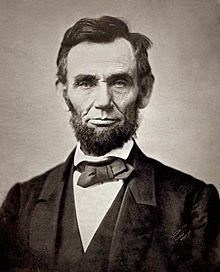
Lincoln's Gettysburg address: A lesson for dealing with detractors

Lincoln's Gettysburg address is now considered one of the greatest speeches in American history. Quotes from the speech are so widely used globally, that we forget their origin. For example, my sixth grade teacher in India used  Lincoln's closing statement of democracy being the government of the people, for the people and by the people to explain democracy to us. America is celebrating the 150th anniversary of the speech this year with much pomp and pride.

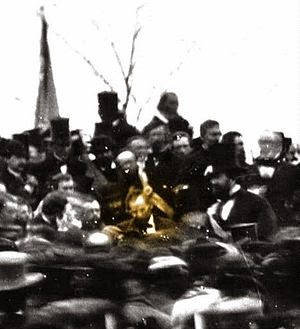
The two to three minute speech is today marveled for its simple eloquence, and for its ability to distill the essence of America's values in a few profound sentences. In fact Lincoln's speech was so unexpectedly short that many photographers missed capturing the historic occasion on their cameras. It is unlikely that the status of the Gettysburg address will even marginally diminish in future, since the power of its words is timeless. 


Examining the journey of the speech from when it was delivered on November 19, 1863 to its current undisputed status as one of best speeches in history illustrates the long journey to success of any endeavor. 

Lincoln was not the main speaker of the day, but followed the two hour long well-received address of the keynote speaker : politician and orator, Edward Evert. The reaction to Lincoln's address was far from overwhelmingly positive. The reactions of the press was predictably along political lines. The New York Times, the Providence Daily Journal and the Republic were very favorable to the speech. However, the criticism was particularly harsh from some others. For example, The Chicago Times wrote that

"The cheek of every American must tingle with shame as he reads the silly flat and dishwattery [sic] remarks of the man who has to be pointed out as the President of the United States. … Is Mr. Lincoln less refined than a savage? … It was a perversion of history so flagrant that the most extended charity cannot view it as otherwise than willful."

The Patriot dismissed it as some "silly remarks", and even the British paper the London Times minced no words in the following report.


The ceremony was rendered ludicrous by some of the sallies of that poor President Lincoln. Anything more dull and commonplace it would not be easy to produce." 
 

However the astute keynote speaker Evert realized the significance of Lincoln's speech, and in a tremendous display of courage wrote to Lincoln.
 
 I should be glad, if I could flatter myself that I came as near to the central idea of the occasion, in two hours, as you did in two minutes.”

Lincoln graciously replied that he was glad his speech was not a complete failure. Over the years the speech slowly but surely entered the realms of the American public, and acquired its current hallowed status. In fact the Patriot
retracted its 1863 editorial comments, by expressing its regret for the error. 

Aspiring and present leaders can draw inspiration from this remarkable journey of the Gettysburg
address. Success does not happen overnight, but has a rather tumultuous journey. Even the best work can risk being drowned by the voices of a few critics. But as Epictetus says there is no point worrying about things beyond our control. One can only do one's best and move on. We live in times of instant gratification and pressure for short term results. It's worth taking the time to pause and look at the origins of some of the great and enduring achievements in history. Finally, as Aristotle points out, our success (a good life) does not end when we die. Lincoln did not live to see the rise of his "little speech" to legendary status. But his legacy lives on, stronger than ever.      

Lincoln picture credit
Gettysburg address picture credit
 

Transformational leadership: Part 3 (Concluding comments)


The influence of the transformational theory of  leadership is clear since the term “vision” -  an important characteristic of transformational leadership - is somewhat of a fad now. The inspiring nature of transformational theory; where the leader empowers their followers to transcend their self-interests for a greater cause makes it intuitively appealing. Transformational leaders are role models with strong value systems, who want to lead social change through a spirit of cooperation. Perhaps, the biggest strength of transformational leadership is that it is considered to be a process, rather than a characteristic which only a special few possess. Therefore organizations can develop transformational leaders. Finally, the Multifactor leadership questionnaire (MLQ) is an effective tool in assessing the transformational leadership potential of individuals, and can be used for self-development and training.     

Interestingly, some of the strengths of transformational leadership are also its weaknesses. For example, in order to capture the inspiring aspect of leadership, qualities like idealized influence, inspirational motivation, intellectual stimulation etc. are considered to be distinct, but some studies indicate that they could overlap. The distinction between transformational and transactional leadership is also not always clear; in fact leaders are advised to use both styles depending on the situation, although the definition of situation is unclear.

Despite the emphasis that transformational leadership is a process, and not a characteristic it is often discussed as the quality (often the charismatic quality) of the leader. For example, Steve Jobs’s name regularly comes up when we discuss contemporary transformational leaders, but not everyone can be a Steve Jobs.  Similarly, the term “vision” conjures up an image of something of a grandiose scale, which makes it exclusive, and even elitist. Since transformational leaders, at least in the common jargon, are also considered charismatic, there is the potssibility of it being misused. Steve Jobs’s “reality distortion” to influence his employees is now legendary; thankfully he only used this ability to create high quality products. In other words, we tend to think of transformational leadership from the higher end of the scale; something which is the prerogative of top executives who are able to bring in earth shattering changes to their organizations.

Nevertheless, transformational leadership with its strong moral focus and emphasis on -change- is an important leadership theory for our times.  
Picture credit